Biography Notes
Made with DoodleNotes · Oct 28, 2026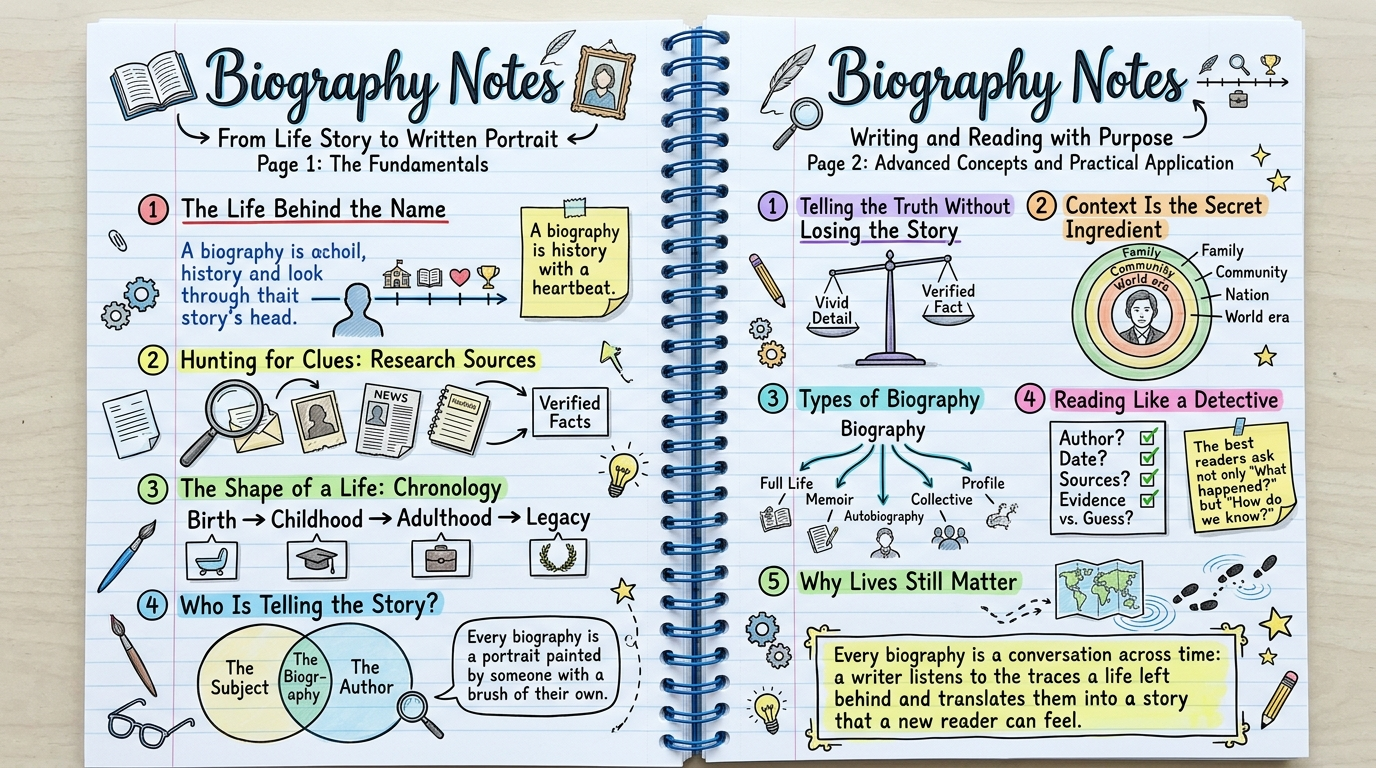
Biography Notes
The same content DoodleNotes wrote before drawing it.
Biography Notes → From Life Story to Written Portrait
- 1
The Life Behind the Name
A biography is a detailed account of a real person's life, written by someone else. It goes beyond a simple list of dates to explore who the person was, what shaped them, and why their story matters. Good biographies bring a real human being to life on the page.
Sticky note: A biography is history with a heartbeat.
- 2
Hunting for Clues: Research Sources
Biographers gather information from primary sources such as letters, diaries, photographs, and official records. They also use secondary sources like other books, newspaper articles, and interviews with people who knew the subject. Cross-checking these sources helps separate verified facts from rumors.
- 3
The Shape of a Life: Chronology
Most biographies follow a chronological structure, moving from birth through childhood, adulthood, and later years. Some writers choose thematic arrangements instead, grouping chapters around a central idea like a career or a struggle. Either way, the structure should help the reader understand cause and effect in the subject's life.
- 4
Who Is Telling the Story?
Every biography is shaped by its author's choices about what to include, emphasize, or leave out. Biographers must balance admiration for their subject with honesty about flaws and failures. Recognizing the author's perspective is a key skill for any reader of biography.
Sticky note: Every biography is a portrait painted by someone with a brush of their own.
Biography Notes → Writing and Reading with Purpose
- 1
Telling the Truth Without Losing the Story
Strong biographers use vivid scenes, dialogue, and specific details to make events feel real. However, they must avoid inventing facts or presenting guesses as certainties. Phrases like 'she likely felt' or 'records suggest' signal honest uncertainty to the reader.
- 2
Context Is the Secret Ingredient
A person's life makes more sense when placed within their historical moment. A good biography explains the economy, politics, culture, and social norms that shaped the subject's choices. Without context, readers may misjudge decisions that were ordinary or extraordinary in their own time.
- 3
Types of Biography
Biographies come in several forms, including full-length life studies, memoirs written by the subject, autobiographies, collective biographies covering multiple people, and short profiles. Each type serves a different purpose and reader need. Choosing the right form depends on how much time, depth, and perspective the story requires.
- 4
Reading Like a Detective
When reading a biography, ask who wrote it, when, and what sources they used. Notice whether the author quotes documents, relies on memory, or speculates about feelings. Asking these questions turns passive reading into active analysis.
Sticky note: The best readers ask not only 'What happened?' but 'How do we know?'
- 5
Why Lives Still Matter
Biographies allow us to learn from people who faced problems we may encounter, and to see how individuals changed the world around them. They also remind us that ordinary choices accumulate into extraordinary outcomes. Reading a well-written life can build empathy and perspective.
Bottom insight: Every biography is a conversation across time: a writer listens to the traces a life left behind and translates them into a story that a new reader can feel.
For study only. Check anything you rely on against your textbook.
Studying something else?
Type a topic and get your own hand-drawn page like this one in about 40 seconds.
your turnMore from the gallery
See all notes