explain GLP-1 drugs and its negative effects
Made with DoodleNotes · Oct 24, 2026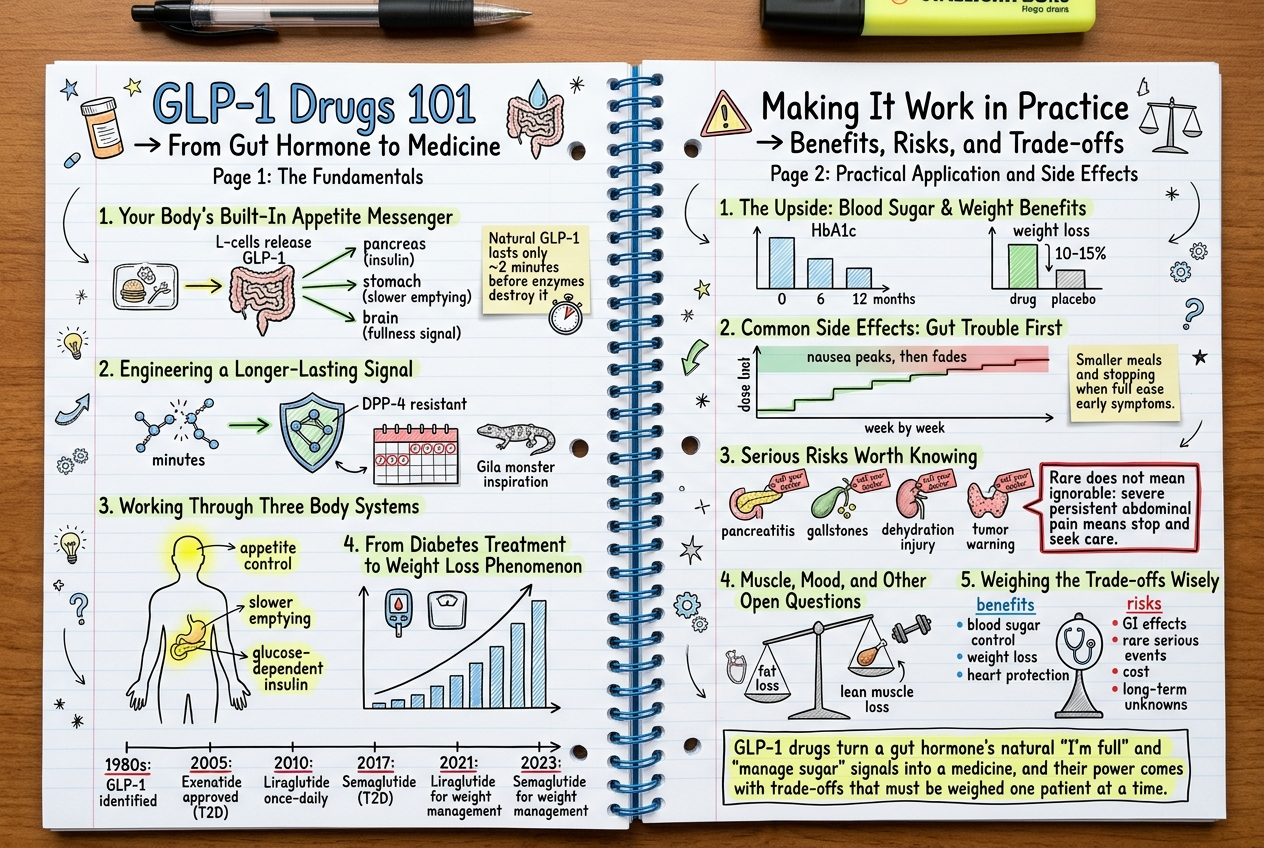
explain GLP-1 drugs and its negative effects
The same content DoodleNotes wrote before drawing it.
GLP-1 Drugs 101 → From Gut Hormone to Medicine
- 1
Your Body's Built-In Appetite Messenger
GLP-1 (glucagon-like peptide-1) is a hormone naturally released by specialized cells in your intestines after you eat. It signals your pancreas to release insulin when blood sugar rises, slows down how fast your stomach empties, and tells your brain you are getting full. The natural hormone breaks down within minutes, which is why it cannot easily be used as a drug on its own.
Sticky note: Natural GLP-1 lasts only about 2 minutes in the bloodstream before enzymes destroy it.
- 2
Engineering a Longer-Lasting Signal
Scientists created GLP-1 receptor agonists, synthetic molecules that mimic the natural hormone but resist breakdown by the enzyme DPP-4. Some are modified versions of a peptide found in Gila monster saliva, which inspired the drug exenatide. Others, such as semaglutide and tirzepatide, are engineered to stay active in the body for days, allowing weekly dosing.
Sticky note: Semaglutide stays active for about 7 days, compared with minutes for the natural hormone.
- 3
Working Through Three Body Systems
GLP-1 drugs act on the brain's appetite centers, the stomach, and the pancreas simultaneously. In the brain, they reduce hunger and food cravings, while in the stomach they delay gastric emptying, prolonging fullness. In the pancreas, they boost insulin release only when blood sugar is high, which lowers the risk of dangerous lows.
- 4
From Diabetes Treatment to Weight Loss Phenomenon
GLP-1 drugs were first approved to treat type 2 diabetes because of their blood sugar control. Clinical trials then showed significant weight loss, leading to separate approvals for chronic weight management. Their rapid rise in popularity has made them among the most discussed medications in recent years.
Timeline: 1980s Scientists identify GLP-1 as a key gut hormone regulating insulin · 2005 Exenatide, the first GLP-1 receptor agonist, is approved for type 2 diabetes · 2010 Liraglutide introduced as a once-daily injection · 2017 Semaglutide approved for type 2 diabetes in the US · 2021 Higher-dose liraglutide approved for chronic weight management · 2023 Semaglutide approved for chronic weight management
Making It Work in Practice → Benefits, Risks, and Trade-offs
- 1
The Upside: Blood Sugar and Weight Benefits
Clinical trials show GLP-1 drugs can lower HbA1c substantially in people with type 2 diabetes and produce meaningful weight loss, often in the range of 10 to 15 percent of body weight with newer agents. Some studies also suggest cardiovascular benefits, including reduced risk of major heart events in people with existing heart disease. Results vary between individuals, and the drugs work best alongside diet and physical activity.
- 2
The Common Side Effects: Gut Trouble First
The most frequently reported negative effects involve the digestive system, including nausea, vomiting, diarrhea, constipation, and abdominal pain. These usually appear during dose escalation and often lessen over time. Slowing the stomach is the same mechanism that produces fullness, so digestive discomfort is closely tied to how the drug works.
Sticky note: Eating smaller meals and stopping when full can ease many early digestive side effects.
- 3
Serious Risks Worth Knowing
Rare but serious risks include pancreatitis, gallbladder disease such as gallstones, and acute kidney injury, often linked to dehydration from severe vomiting or diarrhea. Regulators have also issued warnings about intestinal obstruction and, in animal studies, thyroid C-cell tumors, which is why people with a personal or family history of medullary thyroid cancer or MEN2 should avoid these drugs. Anyone experiencing severe abdominal pain, persistent vomiting, or signs of dehydration should seek medical care promptly.
Sticky note: Rare does not mean ignorable: severe persistent abdominal pain is a reason to stop and seek care.
- 4
Muscle, Mood, and Other Open Questions
Weight loss from GLP-1 drugs includes both fat and lean tissue, so doctors often recommend resistance training and adequate protein to preserve muscle. Researchers are still studying reports involving mood changes, suicidal thoughts, and rare eye conditions; current large reviews have not confirmed a clear causal link for most of these, but monitoring continues. Long-term effects of years of use remain an active area of research.
- 5
Weighing the Trade-offs Wisely
Deciding whether a GLP-1 drug is appropriate depends on individual health history, the severity of obesity or diabetes, cost, and access to ongoing medical supervision. Because many people regain weight after stopping, these medications are often viewed as long-term treatments rather than short courses. Informed decisions come from comparing expected benefits against personal risk factors with a qualified clinician.
Bottom insight: GLP-1 drugs turn a gut hormone's natural 'I'm full' and 'manage sugar' signals into a medicine, and their power comes with trade-offs that must be weighed one patient at a time.
For study only. Check anything you rely on against your textbook.
Studying something else?
Type a topic and get your own hand-drawn page like this one in about 40 seconds.
your turnMore from the gallery
See all notes