Macro nutrients: Carbs (simple and complex), proteins and fats
Made with DoodleNotes · Oct 21, 2026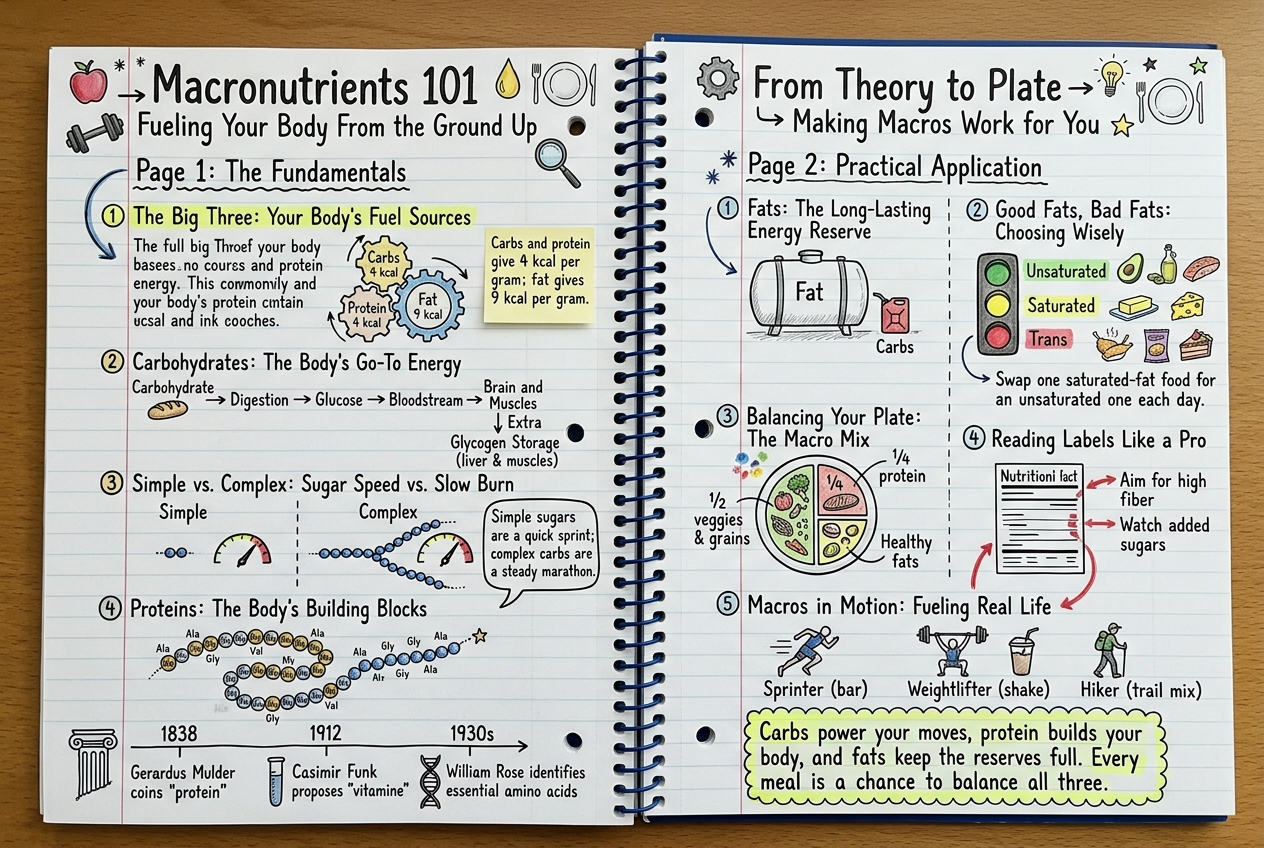
Macro nutrients: Carbs (simple and complex), proteins and fats
The same content DoodleNotes wrote before drawing it.
Macronutrients 101 → Fueling Your Body From the Ground Up
- 1
The Big Three: Your Body's Fuel Sources
Macronutrients are the nutrients your body needs in large amounts: carbohydrates, proteins, and fats. Each one supplies energy measured in calories, and each plays a distinct role, from quick fuel to tissue building to long-term energy storage. Together they keep every cell in your body running.
Sticky note: Carbs and protein give 4 kcal per gram; fat gives 9 kcal per gram.
- 2
Carbohydrates: The Body's Go-To Energy
Carbohydrates are your body's preferred energy source. Your digestive system breaks them down into glucose, which enters your bloodstream and fuels your brain, muscles, and organs. Any glucose you don't need right away is stored as glycogen in your liver and muscles for later use.
- 3
Simple vs. Complex: Sugar Speed vs. Slow Burn
Simple carbohydrates, such as sugars found in fruit, milk, and candy, are made of one or two sugar units and are digested quickly. Complex carbohydrates, like whole grains, beans, and vegetables, contain long chains of sugar molecules that take longer to break down. This difference affects how fast your blood sugar rises and how long you stay full.
Sticky note: Simple sugars are a quick sprint; complex carbs are a steady marathon.
- 4
Proteins: The Body's Building Blocks
Proteins are made of amino acids linked together like beads on a string. Your body uses them to build and repair muscle, make enzymes and hormones, and support immune function. Nine amino acids are considered essential because your body cannot make them, so you must get them from food.
Timeline: 1838 Dutch chemist Gerardus Mulder coins the term 'protein' from the Greek word 'proteios,' meaning 'of primary importance' · 1912 Casimir Funk proposes the term 'vitamine,' sparking the modern study of nutrition science · 1930s William Rose identifies the essential amino acids, revealing which proteins the body cannot make itself
From Theory to Plate → Making Macros Work for You
- 1
Fats: The Long-Lasting Energy Reserve
Fats are the most energy-dense macronutrient, packing 9 calories per gram. They store energy for the long haul, insulate your body, protect your organs, and help you absorb fat-soluble vitamins A, D, E, and K. Fats are made of fatty acids and glycerol, and the type of fatty acid determines how healthy a fat is.
- 2
Good Fats, Bad Fats: Choosing Wisely
Unsaturated fats, found in olive oil, avocados, nuts, and fatty fish, support heart health and are generally considered beneficial. Saturated fats, found in butter and fatty meats, should be limited, and trans fats, found in some processed foods, are best avoided. Choosing mostly unsaturated fats is a simple way to support your long-term health.
Sticky note: Swap one saturated-fat food for an unsaturated one each day.
- 3
Balancing Your Plate: The Macro Mix
A balanced meal usually combines all three macronutrients in roughly proportionate amounts, and each supports the others. Protein and fiber-rich carbs help you feel full, while fats slow digestion and keep blood sugar steadier. Many dietary guidelines suggest that carbs make up a large share of daily calories, with protein and fats filling the rest.
- 4
Reading Labels Like a Pro
Nutrition labels list grams of carbohydrates, protein, and fat per serving, and they break carbs into total carbs, fiber, and sugars. Checking the serving size first is essential, because the numbers apply only to that amount. Looking at added sugars and the type of fat can quickly reveal how healthy a food really is.
- 5
Macros in Motion: Fueling Real Life
Your ideal macro balance depends on your age, activity level, and goals. An athlete may need more carbohydrates to refuel muscles, while someone building strength may prioritize protein. Paying attention to how you feel after meals is one of the most practical ways to learn what works for your body.
Bottom insight: Carbs power your moves, protein builds your body, and fats keep the reserves full. Every meal is a chance to balance all three.
For study only. Check anything you rely on against your textbook.
Studying something else?
Type a topic and get your own hand-drawn page like this one in about 40 seconds.
your turnMore from the gallery
See all notes