Instructional Model
Made with DoodleNotes · Oct 27, 2026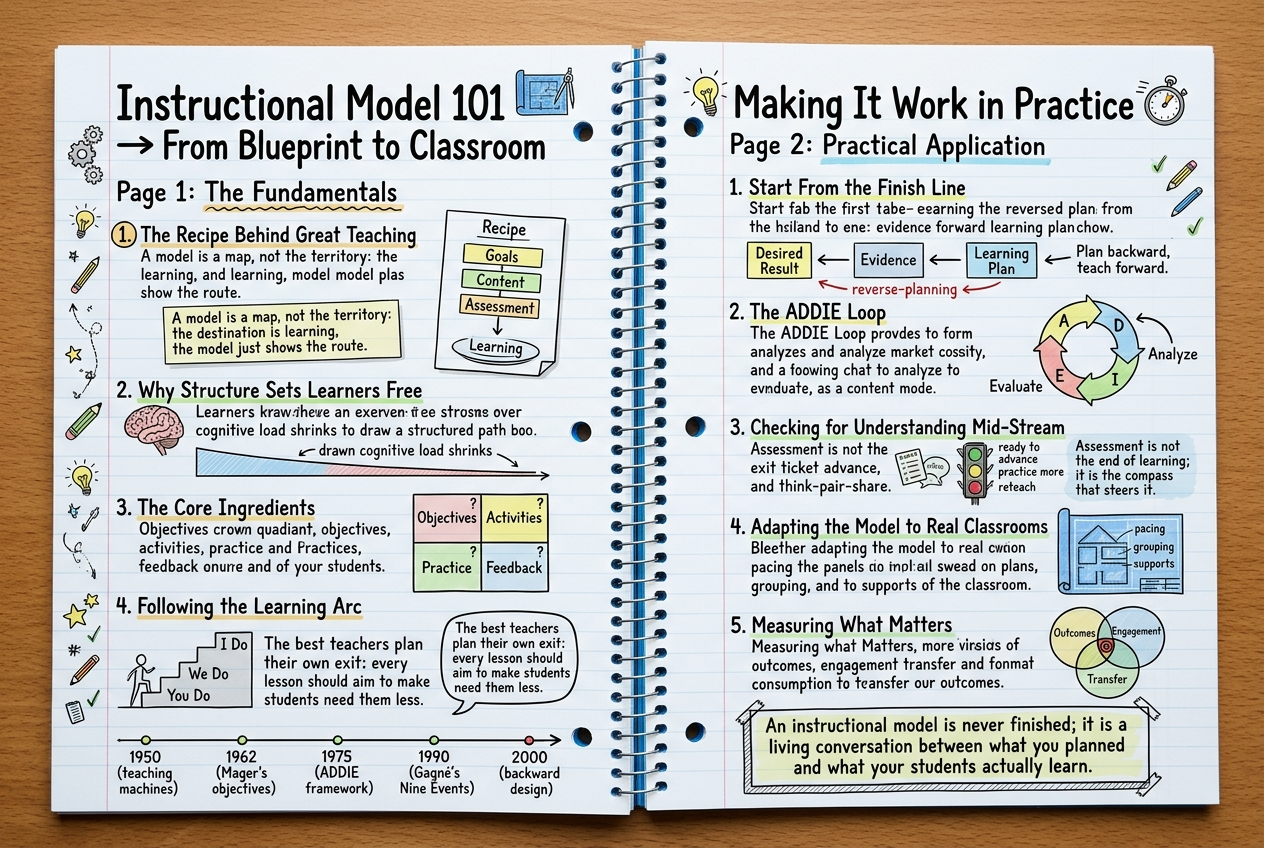
Instructional Model
The same content DoodleNotes wrote before drawing it.
Instructional Model 101 → From Blueprint to Classroom
- 1
The Recipe Behind Great Teaching
An instructional model is a structured plan that guides how teachers design and deliver learning. Think of it as a recipe: it lists the ingredients (goals, content, materials) and the steps (how learning unfolds) so that effective teaching can be repeated and improved. Good models make the invisible thinking of expert teachers visible to everyone.
Sticky note: A model is a map, not the territory: the destination is learning, the model just shows the route.
- 2
Why Structure Sets Learners Free
A clear instructional model reduces guesswork for both teacher and student. When students know what comes next, their working memory is freed up to focus on the actual ideas. Predictable structure builds confidence, especially for learners who struggle with ambiguity.
- 3
The Core Ingredients
Most instructional models share a few common elements: clear objectives, a sequence of activities, opportunities for practice, and some form of feedback or assessment. Each element answers a basic question: Where are we going, how do we get there, how will we practice, and how will we know we arrived?
- 4
Following the Learning Arc
Instruction typically moves from teacher-guided modeling toward independent student work. Learners first watch an expert perform, then try with support, and finally work alone. This gradual release of responsibility is the spine of many models.
Sticky note: The best teachers plan their own exit: every lesson should aim to make students need them less.
Timeline: 1950 Behaviorist-inspired teaching machines introduce programmed instruction · 1962 Robert Mager publishes objectives-based instructional design principles · 1975 ADDIE framework gains popularity in military and corporate training · 1990 Gagné's Nine Events of Instruction becomes a widely used classroom reference · 2000 Backward design (Wiggins and McTighe) reshapes curriculum planning
Making It Work in Practice
- 1
Start From the Finish Line
Backward design asks teachers to decide what evidence of learning they need before planning activities. By defining the assessment first, every lesson becomes purposeful rather than decorative. This approach prevents the common trap of covering content without checking whether anyone learned it.
Sticky note: Plan backward, teach forward.
- 2
The ADDIE Loop
ADDIE stands for Analyze, Design, Develop, Implement, and Evaluate. It is a cycle rather than a straight line: evaluation results send teachers back to analysis. Used well, it turns each lesson into an experiment that improves the next one.
- 3
Checking for Understanding Mid-Stream
Formative checks such as exit tickets, quick polls, and think-pair-share let teachers adjust in real time. These moments reveal which students are ready to advance and which need another pass. Frequent small checks beat one large test at the end.
Sticky note: Assessment is not the end of learning; it is the compass that steers it.
- 4
Adapting the Model to Real Classrooms
No model fits every learner perfectly, so effective teachers adapt sequences, pacing, and supports to context. A model is a flexible scaffold, not a rigid script. Fidelity matters, but so does responsiveness to the students in front of you.
- 5
Measuring What Matters
Evaluating an instructional model means looking at outcomes, student engagement, and teacher confidence together. Test scores alone can miss whether learning transfers to new situations. Collect multiple kinds of evidence before deciding a model is working.
Bottom insight: An instructional model is never finished; it is a living conversation between what you planned and what your students actually learn.
For study only. Check anything you rely on against your textbook.
Studying something else?
Type a topic and get your own hand-drawn page like this one in about 40 seconds.
your turn