Module 2: Instructional Model
Made with DoodleNotes · Oct 27, 2026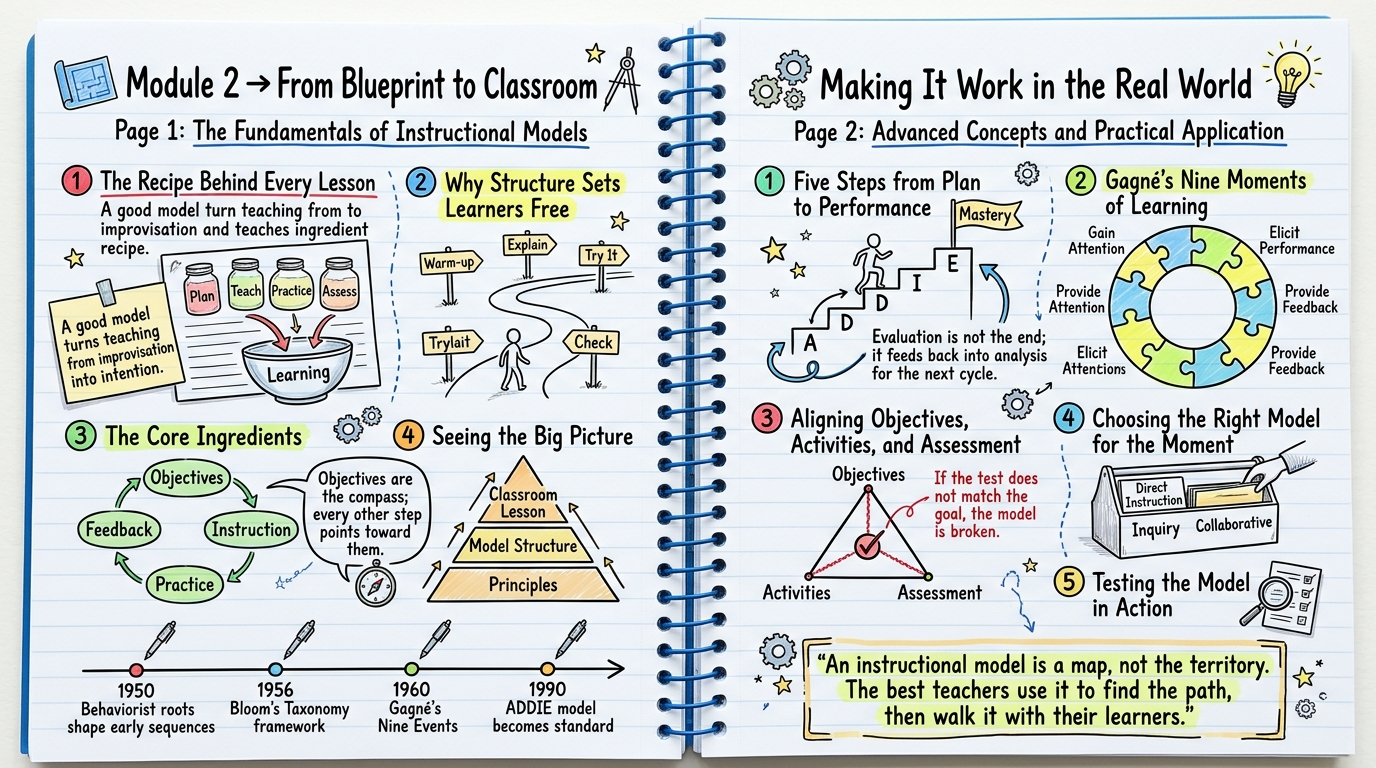
Module 2: Instructional Model
The same content DoodleNotes wrote before drawing it.
Module 2 → From Blueprint to Classroom
- 1
The Recipe Behind Every Lesson
An instructional model is a structured, repeatable plan that guides how learning happens. Just like a recipe tells a cook what to combine and in what order, an instructional model tells a teacher how to move learners from not knowing to knowing. It brings consistency, purpose, and clarity to what would otherwise be guesswork.
Sticky note: A good model turns teaching from improvisation into intention.
- 2
Why Structure Sets Learners Free
Learners do their best thinking when they know what to expect. A clear instructional model reduces cognitive load because students spend less energy wondering what comes next and more energy understanding the content. Predictable routines build confidence and make it easier to focus on the hard parts of learning.
- 3
The Core Ingredients
Most instructional models share a few essential components: clear learning objectives, a sequence of instruction, opportunities for practice, and some form of feedback or assessment. Together these elements form a loop that keeps teaching responsive to what learners actually understand.
Sticky note: Objectives are the compass; every other step points toward them.
- 4
Seeing the Big Picture
Instructional models are not rigid scripts but flexible frameworks. They give teachers a shared vocabulary for planning and reflecting on lessons. When educators understand the underlying structure, they can adapt it to different subjects, learners, and contexts without losing the logic that makes it work.
Timeline: 1950 Behaviorist roots shape early structured teaching sequences · 1956 Bloom's Taxonomy offers a framework for learning objectives · 1960 Gagné's Nine Events of Instruction formalize lesson design · 1990 ADDIE model becomes a standard in instructional design
Making It Work in the Real World
- 1
Five Steps from Plan to Performance
The ADDIE model moves through Analysis, Design, Development, Implementation, and Evaluation. Analysis clarifies who the learners are and what they need. Design maps out the path, development creates materials, implementation delivers them, and evaluation checks whether learning truly happened.
Sticky note: Evaluation is not the end; it feeds back into analysis for the next cycle.
- 2
Gagné's Nine Moments of Learning
Robert Gagné identified nine events that support learning, from gaining attention to enhancing retention and transfer. Each event addresses a specific mental process, such as activating prior knowledge or providing feedback. Teachers can use these as a checklist to ensure no critical step is skipped.
- 3
Aligning Objectives, Activities, and Assessment
A powerful instructional model keeps three things in harmony: what learners should be able to do, what they actually practice, and how they demonstrate it. When these align, students know exactly what success looks like and teachers can measure progress with confidence.
Sticky note: If the test does not match the goal, the model is broken.
- 4
Choosing the Right Model for the Moment
No single model fits every situation. Direct instruction suits procedural skills, inquiry-based models support exploration, and cooperative models build collaboration. Experienced designers select and blend models based on learner needs, time, and content goals.
- 5
Testing the Model in Action
Once implemented, a model should be checked against real evidence: Did students meet the objectives? Where did they struggle? Which steps felt unnecessary? Honest reflection turns a good model into a great one over time.
Bottom insight: An instructional model is a map, not the territory. The best teachers use it to find the path, then walk it with their learners.
For study only. Check anything you rely on against your textbook.
Studying something else?
Type a topic and get your own hand-drawn page like this one in about 40 seconds.
your turn