How to get 100 paid subscribers on substack
Made with DoodleNotes · Oct 20, 2026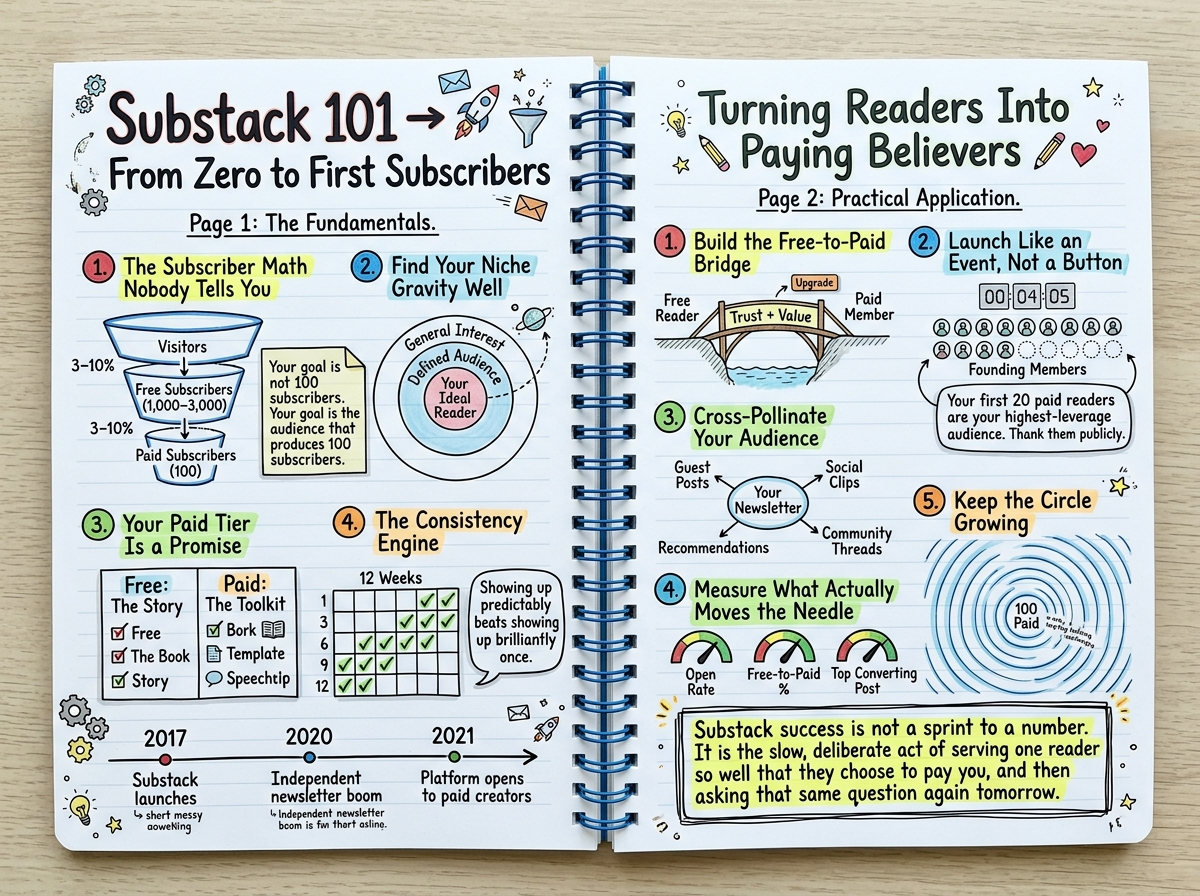
How to get 100 paid subscribers on substack
The same content DoodleNotes wrote before drawing it.
Substack 101 → From Zero to First Subscribers
- 1
The Subscriber Math Nobody Tells You
Reaching 100 paid subscribers is a numbers game with a predictable shape. Most newsletters convert roughly 3 to 10 percent of free subscribers into paying members, so 100 paid readers typically requires somewhere between 1,000 and 3,000 engaged free subscribers. Knowing this ratio turns a vague goal into a concrete target you can plan around.
Sticky note: Your goal is not 100 subscribers. Your goal is the audience that produces 100 subscribers.
- 2
Find Your Niche Gravity Well
Newsletters that grow fast solve a specific problem for a specific reader. A broad topic like 'marketing' is hard to sell, while 'email strategy for solo bookkeepers' gives people a clear reason to pay. Your niche is the gravitational center that attracts readers who already want what you offer.
- 3
Your Paid Tier Is a Promise
A paid subscription is a promise of extra value, not a locked door on existing content. Successful writers offer things readers cannot get for free, such as deeper analysis, templates, community access, or a regular Q&A. Define the paid promise clearly before you ask anyone to upgrade.
- 4
The Consistency Engine
Readers pay for writers they trust to show up. A reliable publishing rhythm, whether weekly or biweekly, builds habit and anticipation that eventually converts into loyalty. Consistency matters more than volume, so pick a schedule you can sustain for a year.
Sticky note: Showing up predictably beats showing up brilliantly once.
Timeline: 2017 Substack launches, making newsletter monetization accessible to individual writers · 2020 Independent newsletter boom as readers seek direct connections with writers · 2021 Substack opens its platform to a wave of paid writers and creators
Turning Readers Into Paying Believers
- 1
Build the Free-to-Paid Bridge
Free subscribers become paying ones through trust plus timing. Place a clear, non-pushy upgrade prompt after your most valuable free posts, and occasionally share a paid-only sample so readers feel what they are missing. Make the ask feel like an invitation to a deeper conversation.
- 2
Launch Like an Event, Not a Button
A founding-member or launch offer creates urgency and social proof. Limited-time pricing, a founding badge, or a special welcome series gives early adopters a reason to act now. Your first 20 paid subscribers often come from people who already know and trust you personally.
Sticky note: Your first 20 paid readers are your highest-leverage audience. Thank them publicly.
- 3
Cross-Pollinate Your Audience
Growth comes from where your readers already gather. Guest post on established newsletters in your niche, share valuable excerpts on social platforms, and collaborate with complementary writers for recommendation swaps. Each channel is a doorway that leads back to your subscribe page.
- 4
Measure What Actually Moves the Needle
Track conversion rate from free to paid, open rate, and which posts drive upgrades. These numbers reveal what your readers value most. Double down on the content types that convert and gently retire the ones that don't.
- 5
Keep the Circle Growing
Once you reach 100, the goal shifts from acquisition to retention and community. Reward long-term subscribers, invite feedback, and let readers shape future content. Loyal readers become your best marketers.
Bottom insight: Substack success is not a sprint to a number. It is the slow, deliberate act of serving one reader so well that they choose to pay you, and then asking that same question again tomorrow.
For study only. Check anything you rely on against your textbook.
Studying something else?
Type a topic and get your own hand-drawn page like this one in about 40 seconds.
your turn